 Paul Favre
Old money style is not about spending the most. It is about looking like you never had to think about it. The old money man chooses classic pieces over fleeting trends, shuns visible logos, and lets fabric and fit do the talking. The codes are subtle, but they are learnable, and once you know them you will never look at a flashy designer piece the same way again.
This guide breaks down the whole aesthetic: the philosophy, the wardrobe essentials, the materials, the colors and the finishing touches.
The short version
- Quality over logos, always. The garment should speak, not the brand.
- Stick to a neutral palette: navy, grey, beige, cream, with rare accents.
- Invest in natural materials: wool, cashmere, cotton, leather, suede.
- Fit is non-negotiable. A tailored mid-range suit beats an ill-fitting luxury one.
What old money style actually is
The old money aesthetic is understated elegance: quietly confident, never ostentatious. It comes from families where a conservative, polished appearance was passed down through generations, favouring clean lines and tailored fits over whatever happens to be trending.
The contrast with new money fashion is the point. New wealth tends to display itself: big logos, loud pieces, this season’s hype. Old money whispers. A cashmere sweater in a neutral shade signals more than any monogram, to the people who know.
One caution: social networks have made the old money look genuinely trendy, and fast fashion has followed. Be careful where you buy. A polyester blazer cut to look old money misses the entire point, because the aesthetic is built on quality that lasts decades, not seasons.
The wardrobe essentials
Suits and blazers
The foundation. Old money suits live in classic shades of navy and charcoal, tailored to fit impeccably and cut from fabrics that hold their shape for years. They are an investment in appearance and in tradition.
The blazer is the workhorse: dressed up with trousers for business, paired with quality denim for a smart-casual event, always with an air of effortless ease. If you master one tailored piece, make it a navy blazer.
Shirts
The classic white button-down is the cornerstone: under a suit, open at the collar on a weekend, always clean and pressed. Around it, subtle stripes and solid colors add variety without breaking the restraint. Collar and cuff details matter more here than anywhere else, since they are what people actually see up close.
Trousers and chinos
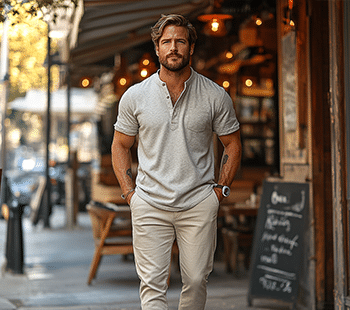
Tailored trousers in wool or flannel handle the formal end. Chinos handle everything else: beige or navy, well cut, pressed. They are the uniform of leisurely weekends done properly. Whichever you wear, the fit through the leg is what separates polished from forgettable, so budget for a tailor.
Materials: the real signal
Fabric is where old money style is won or lost.
- Wool brings resilience and warmth, with a heritage of country estates and outdoor pursuits.
- Cashmere is quiet refinement itself: softness you notice the moment you see it move.
- Cotton in its finer grades (Oxford cloth, poplin, Egyptian cotton) covers the everyday with breathability and crispness.
- Leather and suede carry the accessories. Good leather develops a patina that improves with age, which is exactly the point: old money pieces are meant to get older.
When you shop, read labels and touch fabric. Natural fibres, substantial weight, clean construction. If the composition tag reads like a chemistry exam, put it back.
The color palette
Neutrals reign: navy, grey, beige, cream, brown, white. These shades coordinate effortlessly with each other, transition from boardroom to dinner without a thought, and never date.
Accents exist, but they are rare and deliberate: a burgundy knit, a forest green stripe, a pale blue shirt. One well-placed hue per outfit, never more. The palette is the reason old money wardrobes feel infinite with thirty pieces while trend wardrobes feel empty with a hundred.
Knitwear: the casual signature
Nothing says quiet luxury like good knitwear. Crew neck and V-neck sweaters in cashmere or merino are the staples: worn over a collared shirt, layered under a blazer, or draped over the shoulders in the most old money gesture there is.
Cardigans and knitted vests extend the range, adding dimension while keeping the classic silhouette. Buy the best yarn you can afford; a single great cashmere crewneck outdresses five average ones.
Footwear: grounded in tradition
Two pairs cover most of the territory. Loafers, relaxed yet polished, are the country club classic: penny loafers in brown leather or suede first. Oxfords handle business and ceremony in black or dark brown.
Beyond those, Chelsea boots move seamlessly from day to evening, and brogues add a touch of heritage texture. Whatever you choose, keep them impeccable: old money shoes are older than they look and better kept than they need to be.
Accessories: small details, loud signal
- The watch. A classic timepiece, ideally one that looks inherited even if it is not. Leather strap or simple steel; the dial does not need to shout.
- Cufflinks. A personal touch reserved for the occasions that call for them.
- The belt. Good leather, matched to the shoes, with a discreet buckle.
- The pocket square. A flourish of personality against a neutral canvas, folded simply.
The rule across all of them: no visible branding. Discretion is the luxury.
The style icons to study
George Clooney is the modern reference: tailored suits in classic colors, quiet confidence, nothing ever trying too hard. David Beckham shows the more casual register: well-fitted chinos, polo shirts and knitwear from heritage brands, neutral palette, classic timepieces, and not a flashy logo in sight.
Study them not for individual outfits but for the constant: everything fits, nothing shouts.
Grooming: polished, never overdone
The old money look extends above the collar. Clean lines, well-kept hair, a groomed beard or a proper shave. The aim is to look after yourself without appearing to try. Our grooming guides cover the full routine.
The bottom line
Dressing like old money is a long game played with a short list: neutral colors, natural fabrics, impeccable fit, zero logos. Build the wardrobe one considered piece at a time and it will outlast every trend cycle, and so will the impression it leaves.
For the adjacent codes, see our guide to the smart casual dress code, the closest neighbour to old money style in everyday life.